This post is spurred on by Bill Maher's most recent Real Time HBO show, in which the guests were female rapper M.I.A., former IMF chief economist Simon Johnson, Nobel Peace Prize winner and 'Banker to the poor' Mohammad Yunus, and Pulitzer Prize-winning author and Newsweek magazine editor, Jon Meacham. When the "easy target" Bush administration was in power, Maher was a formidible political satirist. His barbs were usually well-place and right on, although he often overlooked the deeper issues in favor of the popular ones. It has become clear that in the presence of the Obama administration, Maher is comedy first, political issues second (or maybe even third), passing up few opportunities to cheap-shot the easy targets, which include religion, the American public at large, and his audience in part.
That much was clear from the get-go, during his interview with Tamil Sri Lankan female visual and rap music artist M.I.A. , when Bill made stupid remarks about Maya's (M.I.A.) pregnant condition during the Grammys, gave an impromptu geography lesson for the dumb American public on Sri Lanka's location, and incorrectly assumed the conflict in Sri Lanka between the Tamal minority and the Sinhalese majority was a religious (Hinduism vs. Buddhism) one. I'm not religious, but I've noticed that Maher won't pass up an opportunity to crucify religion any chance he gets. (He would have made a great Roman Centurion in Jerusalem back in 33 A.D.) The conflict is not religion-based, but rather ethnic and majority-over minority based, the hegemony of the Sinhalese over the Tamil and the Tamil's refusal to docilely accept their role as second class citizens. MI.A.'s purpose for being on the show was to enlighten the American public on the truth of the situation since recent the end of the civil war and defeat of the rebel Tamil Tigers in that country. The Sinhalese oppression now goes unchecked, and rather than make issue of that, Bill chose to make fun of MI.A.'s British accent and even blame the Brits for spawning the conflict.
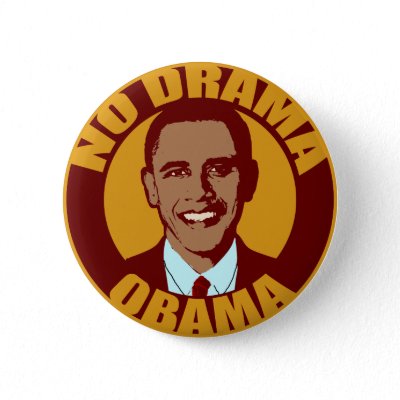
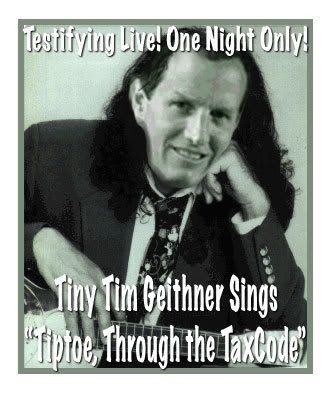
So with that bit of embarrassment out of the way, Maher moved on to the panel- Simon Johnson, Mohammad Yunus and Jon Meacham. Bill lobbed the initial topic, a nice & easy one that posed the question- "It looks like things are getting better but economically speaking, are we out of the woods now?" Johnson swung and connected limply on a pitch he should have been able to hit out of the park by saying that there has been some recovery as "No drama Obama" pulled the banks away from falling off the edge of the cliff, but for the "real economy" (the general public), things still look a bit shakey. Simon, Simon, Simon....what the hell are you doing? Following Maher's lead dumbing-down the economic situation for the Joe 3-pack public? Jeez, you wouldn't ever say anthing so shallow and simplisitc in your Baseline Scenario blog, so why would you boil all the water out of the pan on a highly rated TV show? You know that the Banksters have been sucking up all the goodies out of Obama & Tiny Tim's Santa bag they can, you know the market is being manipulated, and you know that the Gen Public is fucked with a capital "F". At least you could have strongly pointed out where the guv'ment was going wrong, and how Obama's wuss handling of the Banksters and his lack of forward planning was just hastening the inevitable doomsday scenario.
Maher, in one of his rare moments of brilliance, used something Johnson said about "Banana Republics" to make comment on the infectious avarice of the financial sector, and the American public at large, equating unfettered markets with the religion of material greed. (Gotta get that religious snipe in.) Smiling Buddha Mohammad Yunus said that the economic crisis was actually an opportunity for real positive change in the financial sector, and that it was overlooked in favor of the status quo, and failed to be capitalized on. He said "We have selfishness in us and we have selflessness in us...but the way the economic market is designed... it's all about selfishness, and I have no chance about looking out for anybody else." Maher follows up with a comment about how there are no plans for redesigning the financial system, and Obama is still giving money way to the corrupt Wall Street executives he went to Harvard with. Meacham (P.J. O'Rourke light) finally got a comment in about the economic and social disparity of the United States today, citing how the Great Depression brought the nation together as one enabling social and economic change, while now it's all rhetoric and business as usual.
There rest of the show was consumed with Cheney vs. Obama on the terrorist issue, and Maher's favorite pincushion, religion. Now I'm no religious supporter, but gee Bill, give it a rest already. How about some constructive economic solutions? How about what needs to be done to make things better for Americans who are losing their jobs, their meager savings, their freedoms and being forced to eat Genetically Mutated Organisms? Out of all his "New Rules", the only one worthy of mentioning was his last- Stop thinking that electing a Superhero is going to be the answer to our problems. Rather than zeroing in on he puts it, "Chocolate Jesus" (Obama), he turned his attention to California and Schwarzenegger. Saying that it was impossible for the Gubenator to solve California's problems because it's "illeagal" to govern in this state. Maher said "We only govern by ballot initiatives, and there are only two types of those - things I like, and don't raise my taxes. We votes YES on gain and NO on pain. This is why America's founders established a representative democracy, because they knew if the average joe had the chance, he'd vote for a fantasy world with no taxes, free beer and vagina trees." A little broad-based humor, but in essence, Maher's right. The pressure exerted by special interest groups and "political correctness" has fostered the oiling of the squeaky wheel over what makes common sense, and is really in the public good.
This brings us back to the first part of the topic title - All about ME, or perhaps even the collective "WE". The WE being those that can exert the most power and influence over legislation, who gets the breaks, who gets the money, and who gets the shaft. It seems as though it will always be the ME/WE minority that gets the two former boons, while the bane of the shaft falls on the collective "you" majority. Like a good feudal lord, the Prez throws bones to his hounds like the "Credit Card Bill of Rights" which bans retroactive interest rate increases and minimum payment time disclosure among other things, but fails to cap outrageous and usurious interest rates at a percent that's reasonable. He says he's going to close Gitmo, but can't deliver on an exit strategy. He finger-wags at the Wall Street culprits that caused the financial debacle, but does nothing to punish the wrongdoers. And those are only a few issues. Pretty unbelievable for change we're supposed to believe in.
So it seems as though it's still all about ME, only the "ME" here isn't you or I. It's them. The people with the power and the gold still making the rules to serve the people with the power and the gold to make the rules. It doesn't take an IMF economist to know that the robber-barons of Wall Street, Goldman Sachs is manipulating the stock market to their advantage, and yet nothing gets done about it. Gee, could that have anything to do with former T-Sec Hanky-Panky's and current T-Sec Tiny Tim's relationship with GS cronies?
It's time we stopped thinking about ME, and started thinking about US. Instead of focusing on the big score, beating down the competition and amassing as much personal gain at any cost to our ethics and values, we need to develop a mindset that will benefit the majority of the people in this country over our own individual little island worlds. The gap between the HAVES and the HAVE-NOTS is widening; people who lose their jobs and homes now are finding that it sucks to be on the other side of the chasm. What happens when if the dollar truly tanks? (And don't think that it isn't a possibility, because a large part of this nation's economic stability depends on who buys our debt, and other countries ain't buying like they used to.) Maybe then they'll realize we're all in this together, or if you have the biggest guns, you can still get your own way.
As Simon Johnson pointed out in his "What I Didn't Get To Say on Bill Maher Last Night" post on The Baseline Scenario, Mohammad Yunus's idea of the "Social Business" model over a "Strictly-for-Profit" business model is something that needs to be addressed NOW, before it becomes too late. In a country you're doing business in, there has to be a certain social responsibity, otherwise the propensity to suck the citizens dry becomes too great. Whether it's Big Oil, the Pharmaceutical Industry, Insurance, Banking, Tech, etc., whatever, the idea of taking huge amounts of money in profits and not contributing socially (and I don't mean charitable tax write-offs, scholarship funds and grants stamped with the corporate logo) is repugnant. How can a mega-business justify its right to exist in a community, when it has allowed that community to go bankrupt by manipulating the tax laws to not pay its fair share? How can you have a gainfully employed America if you keep shipping jobs overseas for a few tax breaks? How can you have a healthy America if your business pollutes the environment, genetically alters the food supply with unknown and potentially disastrous consequences or drive health care costs through the roof? How can you have a wealthy America when you rig the casino games of Wall Street with under the table financial mechanisms no one understands, that enrich YOU rather than any sucker investors bold or stupid enough to play you game of chance? How can you have a future for America when you keep the wheels of energy stuck in the muck and mire of fossil fuels with cost-prohibitive roadblocks and aggressive lobbying?
It's time we stated thinking about US, the collective "us", and begin to change the mindset about what it all means to co-exist harmoniously in this country, on this planet together. Anyone can be the harbinger of a doomsday scenario (just check the best seller's list) , but it takes courage and forward thinking to become part of the solution rather than part of the problem. Maybe we need an even worse plight to make us al pull together. I'm not suggesting socialism, but I AM advocating social consciousness. Yeah, you can be a naysayer and trumpet the glory of unfettered free-market capitalism. So how's that been working for you of late? All I'm saying is that it's time to employ a little common sense, get off the high horse and do what's right for US as a whole, not what you think is right for just your little world. Because if you're only out for 'ME', you're going to find out soon enough just how small your own little world really is.

Sunday, May 24, 2009




Monday, April 13, 2009
That Which Must Not Be Named...Yet
Man, it's been a long time since I've done a blog post. Too long, I guess. Truth be told, I have been busy, and I guess that's the point of this post- what I've been busy with. But to explain that, I have to explain the post title. "That Which Must Not Be Named.." has nothing to do with a Harry Potter adversary, nor a story by H.P. Lovecraft, but rather an online auction site which isn't online yet that I've been sworn to secrecy about. In order to explain that, I guess we have to take it back a little further.
I had been selling on eBay for about five years by 2005 when I was contacted by someone who asked me if I'd be interested in peddling some of their merchandise. To make a long story short, I agreed and over the years have sold some very interesting and lucrative stuff for them. In fact, as time went by, I was selling A LOT of their stuff, even more than my own. Things seemed to be tooling along fine, until eBay turned to shit about a year or more ago. Even the really good stuff wasn't selling like it used to. To make matters worse, eBay turned into FEEBAY, and every listing was becoming a losing proposition in some way or other. I became discouraged and disgusted listing anything with eBay. Yeah, it might sell quickly better than elsewhere but I was getting garage sale prices on things that were way beyond any garage sales.
I told the guy I was selling for that I was becoming disenchanted with eBay, and I was thinking of throwing in the towel there. (That's about the time I discovered Bonanzle.) He told me to hang on, he was working on something. Meanwhile, I opened up a Bonanzle store, and since it didn't cost me anything to list my stuff there I really had nothing to loose but the time. I decided to get back into selling merchandise I really liked (CDs & records) with the Bonanzle setup, and with a somewhat dark theme to the booth. But selling on Bonanzle is a whole different deal than eBay auctions- much easier to list but harder to sell. Even with the promotional tools they have in place, you really need to work your butt off promotion-wise to make any money there. In the beginning, I did. I really did, and some of my efforts paid off. But in the long run, it's not enough to live on, at least for me.
So let's get back to the guy I had been selling for, who I'll call "Mr. X" in the spirit of his desire for anonymity and secrecy, at least for now. Mr. X decides that he's going to build an online auction site, something that although small-scale, will be better than eBay in numerous ways. Mr. X has some GREAT collectible merchandise in the antiquarian book, vintage magazine, ephemera, photographic and art print categories. Mr. X also has good business savvy, and even though I still don't know a whole lot about him even after our nearly four year business relationship, but I don't think he'd be "sinking it all" into this auction site if he wasn't confident that it was going to make a LOT of money.
Yeah, I have to admit I was skeptical when I first heard about it. Compete with eBay? NO WAY DUDE! That's a recipe for disaster...or at least for a lot of wasted time and money. But, as Mr. X pointed out to me, the big mistake that wannabe eBay competitors make is trying to cover a lot of categories of merchandise and trying to be too big. It's the niche markets that are the key. Smaller is better. Still, with this economic downturn (who am I kidding? It's not a downturn, it;'s a mudslide) I personally don't think that it's a good time to be sinking your life savings into a new online enterprise. But hey, it ain't MY money. It IS however, my time, and that's where I get back to what I've been doing lately, and why I haven't been much with the tweeting, message- boarding, music-making, or even blog posts.
SOooooo...for lack of better option, I've decided to trust that Mr. X's auction site will become a fruitful enterprise (soon I hope) and have been doing merchandise pre-listings so that the site will have some great stuff when it opens. Just some of the things I've been working with - Mark Twain First Editions; 1853 Mississippi- Pacific Railroad Surveys; George Cruikshank 'Comic Almanacs from the mid 1800's; 1864 Travel to the Holy Land; 1829 Edgar Allen Poe Poetry & Reviews; Etchings of Rembrandt; 1798 Duties of the Female Sex; A. A. Milne (Winnie the Pooh author) First Editions; 1885 Elizabeth Custer's 'Boots & Saddles'; 'The Jazz Singer' Al Jolson Photoplay edition 1927; 'Wind In the Willows' 1st Tasha Tudor Illustrated; 1930's Havana Cuba Travel Brochures; 1969 Avant-Garde Art Magazine with Picasso Erotic Gravures; 1854 Patent Report with Smith & Wesson Volcanic Pistol and Isaac Singer's Sewing Machine in it; a Stereoview from the 1920's with 4 guys in a vintage Cadillac who would years later become top General Motors executives; a 1949 French art magazine with Victor Vasarely "OP Art" lithographs in it; signed rare David Levine caricature book; 1793 History of King Charles by Voltaire; 1916 Witchcraft in Salem Village; 1799 Settlement of Genesee Country w/ engravings; 1832 Six Months in the West Indies by Coleridge; 1836 Last of the Mohicans by James Fenimore Cooper; 1810 Life & Actions of Napoleon Bonaparte, and so many, many more. Some of these are worth a LOT of money.
So here I am with all this great stuff just waiting for this auction site to open (and yeah, I can't even hint at the name of it, under pain of betrayal) , adding more all the time, yet not making any money in the meanwhile. Maybe I'm an idiot to put my hope and trust in the designs and machinations of someone I don't know all that well but have done alright by in the past. Maybe I'm just too skeptical for my own good. It's hard to have faith in a new (somewhat risky) business enterprise after all I've been through with the Wall Street debacles and the stock market casino where Goldman Sachs and J. P. Morgan, et al. fix the tables with their derivative-loaded dice, their rigged roulette wheels of rewardless risk, and credit default swap card games of wealth destruction.
Still, Mr. X assures me has a method for driving the right kind of traffic to this auction site quickly, and hasn't told me that I'll have to be doing any promotion on it. Whenever the subject is broached, the response is, "Don't worry. I've got it covered." Well, I hope so. I really do. I hope that it isn't long that I can come back here and post that the site is open for business and we're doing fabulous. In the meanwhile, all I can do is keep a positive attitude, work on doing constructive things and hope I get some good news from somewhere. Maybe when the weather gets warmer. Maybe when I finally get inspired enough to get back into my music studio again...
I had been selling on eBay for about five years by 2005 when I was contacted by someone who asked me if I'd be interested in peddling some of their merchandise. To make a long story short, I agreed and over the years have sold some very interesting and lucrative stuff for them. In fact, as time went by, I was selling A LOT of their stuff, even more than my own. Things seemed to be tooling along fine, until eBay turned to shit about a year or more ago. Even the really good stuff wasn't selling like it used to. To make matters worse, eBay turned into FEEBAY, and every listing was becoming a losing proposition in some way or other. I became discouraged and disgusted listing anything with eBay. Yeah, it might sell quickly better than elsewhere but I was getting garage sale prices on things that were way beyond any garage sales.
I told the guy I was selling for that I was becoming disenchanted with eBay, and I was thinking of throwing in the towel there. (That's about the time I discovered Bonanzle.) He told me to hang on, he was working on something. Meanwhile, I opened up a Bonanzle store, and since it didn't cost me anything to list my stuff there I really had nothing to loose but the time. I decided to get back into selling merchandise I really liked (CDs & records) with the Bonanzle setup, and with a somewhat dark theme to the booth. But selling on Bonanzle is a whole different deal than eBay auctions- much easier to list but harder to sell. Even with the promotional tools they have in place, you really need to work your butt off promotion-wise to make any money there. In the beginning, I did. I really did, and some of my efforts paid off. But in the long run, it's not enough to live on, at least for me.
So let's get back to the guy I had been selling for, who I'll call "Mr. X" in the spirit of his desire for anonymity and secrecy, at least for now. Mr. X decides that he's going to build an online auction site, something that although small-scale, will be better than eBay in numerous ways. Mr. X has some GREAT collectible merchandise in the antiquarian book, vintage magazine, ephemera, photographic and art print categories. Mr. X also has good business savvy, and even though I still don't know a whole lot about him even after our nearly four year business relationship, but I don't think he'd be "sinking it all" into this auction site if he wasn't confident that it was going to make a LOT of money.
Yeah, I have to admit I was skeptical when I first heard about it. Compete with eBay? NO WAY DUDE! That's a recipe for disaster...or at least for a lot of wasted time and money. But, as Mr. X pointed out to me, the big mistake that wannabe eBay competitors make is trying to cover a lot of categories of merchandise and trying to be too big. It's the niche markets that are the key. Smaller is better. Still, with this economic downturn (who am I kidding? It's not a downturn, it;'s a mudslide) I personally don't think that it's a good time to be sinking your life savings into a new online enterprise. But hey, it ain't MY money. It IS however, my time, and that's where I get back to what I've been doing lately, and why I haven't been much with the tweeting, message- boarding, music-making, or even blog posts.
SOooooo...for lack of better option, I've decided to trust that Mr. X's auction site will become a fruitful enterprise (soon I hope) and have been doing merchandise pre-listings so that the site will have some great stuff when it opens. Just some of the things I've been working with - Mark Twain First Editions; 1853 Mississippi- Pacific Railroad Surveys; George Cruikshank 'Comic Almanacs from the mid 1800's; 1864 Travel to the Holy Land; 1829 Edgar Allen Poe Poetry & Reviews; Etchings of Rembrandt; 1798 Duties of the Female Sex; A. A. Milne (Winnie the Pooh author) First Editions; 1885 Elizabeth Custer's 'Boots & Saddles'; 'The Jazz Singer' Al Jolson Photoplay edition 1927; 'Wind In the Willows' 1st Tasha Tudor Illustrated; 1930's Havana Cuba Travel Brochures; 1969 Avant-Garde Art Magazine with Picasso Erotic Gravures; 1854 Patent Report with Smith & Wesson Volcanic Pistol and Isaac Singer's Sewing Machine in it; a Stereoview from the 1920's with 4 guys in a vintage Cadillac who would years later become top General Motors executives; a 1949 French art magazine with Victor Vasarely "OP Art" lithographs in it; signed rare David Levine caricature book; 1793 History of King Charles by Voltaire; 1916 Witchcraft in Salem Village; 1799 Settlement of Genesee Country w/ engravings; 1832 Six Months in the West Indies by Coleridge; 1836 Last of the Mohicans by James Fenimore Cooper; 1810 Life & Actions of Napoleon Bonaparte, and so many, many more. Some of these are worth a LOT of money.
So here I am with all this great stuff just waiting for this auction site to open (and yeah, I can't even hint at the name of it, under pain of betrayal) , adding more all the time, yet not making any money in the meanwhile. Maybe I'm an idiot to put my hope and trust in the designs and machinations of someone I don't know all that well but have done alright by in the past. Maybe I'm just too skeptical for my own good. It's hard to have faith in a new (somewhat risky) business enterprise after all I've been through with the Wall Street debacles and the stock market casino where Goldman Sachs and J. P. Morgan, et al. fix the tables with their derivative-loaded dice, their rigged roulette wheels of rewardless risk, and credit default swap card games of wealth destruction.
Still, Mr. X assures me has a method for driving the right kind of traffic to this auction site quickly, and hasn't told me that I'll have to be doing any promotion on it. Whenever the subject is broached, the response is, "Don't worry. I've got it covered." Well, I hope so. I really do. I hope that it isn't long that I can come back here and post that the site is open for business and we're doing fabulous. In the meanwhile, all I can do is keep a positive attitude, work on doing constructive things and hope I get some good news from somewhere. Maybe when the weather gets warmer. Maybe when I finally get inspired enough to get back into my music studio again...
Thursday, February 26, 2009
We got BOTH kinds of Music..Goth AND Industrial
 We got BOTH kinds of music...Country AND Western... so the old joke goes. Although they're not that far apart, Country music evolved out of Appalachian folk, or hillbilly music and Western music evolved out of cowboy songs and Western Swing. Add to the mixed genre Bluegrass and Gospel and you get pretty much most of the elements of Country/Western
If there ever was a genre of music that is the polar opposite of Country/Western it would have to be Goth/Industrial. Like C&W, Goth/Industrial is a mixed genre that evolved over time adding elements of other compatible musical forms. Like C&W, G&I is somewhat removed now from what it was back 25 or so years ago. In fact, 30 years ago neither the Goth nor Industrial music genres technically even existed, although there were groups and artists that preceded both and paved the way for them.
In order to understand the evolution, there needs to be definition of what makes 'Goth' goth and 'Industrial' industrial. Goth music is dark in tone, has elements of horror, morbidity or moroseness and is often melodramatic. Industrial music evolved out of the avant-garde musique concrete but stylistically couples jarring sounds to cadent rhythms. Or at least that's the basic elements of the genres. Owing to its somber nature, Goth music is good for moping. Owing to its rhythmic impetus, Industrial music is good for dancing. There were crossovers however, even before the genres came into their own way back in the 1980's.
Likely the first 'Goth' bands before there was even such a genre were Alice Cooper and Black Sabbath. Both were rather dark, tackled maudlin themes (nightmares, suicide, murder, witchcraft, demonism, the occult, insanity, etc.) and were vilified by televangelists. Both owe their concept to horror movies. Alice Cooper was 'glam-goth' where Black Sabbath was more your dressed in black leather sort of goth. And then there was KISS, which was just rock n' roll with a 'makeup goth' veneer. These certainly weren't the only dark bands in the pre-Goth period, but most of the others never achieved any critical or commercial success, so you probably aren't aware of their existence.
In the early 70's, I was in a band called Leviathan (no relation to any known band by that name) that described itself as a Gothic Rock Orchestra. Our original music was a dark form of progressive rock, not dissimilar to the more tenebrous aspects of bands like Pink Floyd, King Crimson and Van der Graaf Generator. Some of what we did would be considered 'Goth' by today's standards. Then there was Otto Von Ruggins. He was the first REAL Goth I ever met. In fact, the first time I ever saw him, he was wearing a velvet frock coat. (Now THAT'S a Goth!) Von Ruggins became part of the mid-70's New York 'No-Wave' scene which was the short-lived genre that was partially responsible for spawning Industrial music. Although artists like Lydia Lunch, James Chance and The Contortions, Theoretical Girls, Swans, Teenage Jesus and the Jerks and others you may have peripherally heard of are credited with defining the No Wave genre, Von Ruggins and his band music. and Kongress were the closest thing to Goth-Industrial there was at the time. Kongress often used the trappings of the occult in their shows and to advertise them. They also had (for a period of time) 'mad magician' Geoff (Jeff) Crozier as their lead singer. Their music was a combination of avant-garde industrial rock and minimal synth with gothic theatrics. Very cutting-edge stuff for the time, but of course, you never heard of 'em. Another 2 man minimal-synth group called Suicide (Alan Vega & Martin Rev) was another No-Wave band that had a very Industrial music sound.
The bands most often credited with the spawning of Goth-rock out of the post-punk music scene are Bauhaus, The Cure, Siouxsie and the Banshees, Sisters of Mercy and Southern Death Cult. Like any music subculture, the scene has to start someplace, and for Goth it was The Batcave in London, though local (Elder) Goths elsewhere would probably argue that it was THEIR club that really started Goth music. Like any good music genre with a full head of steam, the fashion that defined it changed from the ripped jeans, T-shirts and leather jackets of punkdom to an all-black clothing concept that grew more fetishistic as the genre progressed. Some fashion statements like piercings, tattoos and bizarrely coloured hair
Funny that the founders of Goth now cringe at the label. There were plenty of bands to follow that were more than willing to revel in their gothiness. The Mission (U.K.), Alien Sex Fiend, Sex Gang Children, Christian Death, Nick Cave and the Bad Seeds, Fields of the Nephilim, Inkubus Sukkubus, Kommunity FK, Skeletal Family, Xmal Deutschland and a slew of others jumped on the Goth-rock bandwagon. And of course, these band begot other Goth bands in the 1990's which we'll get to in a bit.
But what of Industrial? The acknowledged founders of Industrial music came from the Industrial Records label (mid-late 70's) founded by Throbbing Gristle. Early composer/performer Monte Cazazza is credited with coining the Industrial music genre name, but like OVR and Kongress, his contributions to the genre are largely forgotten and his defining early recordings nearly impossible to come by. Other early Industrial music artists included Test Dept., Boyd Rice (NON), Clock DVA, SPK, Whitehouse, Einstürzende Neubauten, Esplendor Geométrico, Severed Heads, and Laibach. The music was often defined by noise, harsh dissonant tones, mechanical beats, repetitive tape loops or sound samples and shouted, distorted vocals. It was meant to be a reaction to the de-humanizing of society, which in its most artistic, non-commercial form at least made a statement. Themes were often fatalistic, fascistic and transgressive - painting scenarios of doom and a dystopian society, alienation, the tyranny of technology and shock tactics. While Goth music embraced Stoker's Dracula remain to this day. vampire, Industrial music embraced Shelley's Frankenstein monster. Just like a Universal horror movie (not to mention The Munsters), it was only natural that the two would eventually come together.
Some bands that weren't really considered Gothic at the onset of the genre but were later embraced by Goths included the Cocteau Twins, Dead Can Dance, Clan of Xymox, This Mortal Coil (all from the 4A.D. label at the time), Depeche Mode, And Also The Trees, The Cranes, Red Lorry Yellow Lorry, Gary Numan, The Cramps, Swans (including Jarboe & Gira side-projects), and undoubtedly many others that I've left out. The broader 'Alternative' umbrella included bands that were in the 'Shoegazer', 'Neoclassical', 'Indie', 'Synthpop', 'Death Rock', 'Psychobilly', 'Post Punk' and other sub-genres.
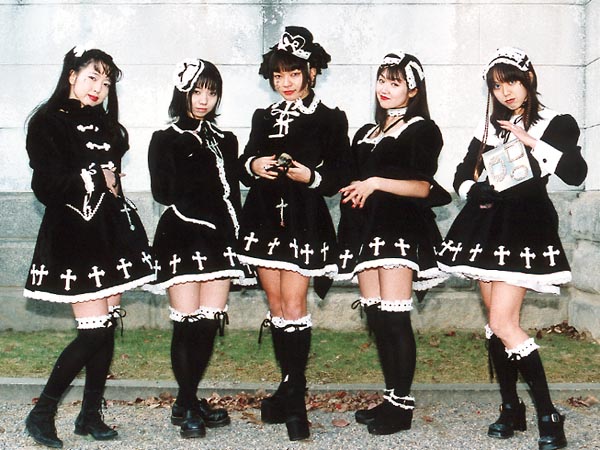
The change in Industrial music came about with the birth of EBM (Electronic Body Music), a term first coined by German minimal synth band Kraftwerk. A solid 4/4 drum machine beat, and a synthesizer-driven sound made EBM ideally suitable for the dance floor. A few early EBM bands were Front 242, Nitzer Ebb, Klinik, X Marks the Pedwalk, Die Form, Die Krupps, and Leæther Strip. Industrial music was becoming more accessible by virtue of its dancability, and the common ground it would share with Gothic music was to be found in the 'Goth clubs'. The Batcave spawned many Goth-Industrial clubs (or at least, Goth-Industrial nights at larger venues where there wasn't enough of a scene to support it all the time) throughout the world. DJs played not only what the scenesters wanted to hear, but also what would get them up on the floor to DANCE. This is where Goth & Industrial became intertwined as a hybrid genre, much like Country/Western. And as they did, fashion became more extreme (leather, latex, PVC, Victorian dress, platform boots, corsets, fishnetstriped stockings, duster coats, bondage pants, hair extensions, etc.) and creative. Record labels like Cleopatra, Projekt, Zoth-Ommog, 21st Circuitry and Metropolis were quick to sign on an ever-growing and evolving stable of Goth-Industrial bands. New sub-genres such as Electro-Industrial with bands including Frontline Assembly, Das Ich, Skinny Puppy, Haujobb, Wumpscut and others; Aggrotech bands like Hocico, Funker Vogt, Suicide Commando; guitar-infused Industrial rock like KMFDM, Ministry, Stabbing Westward, 16 Volt, Pigface, Chemlab, Godflesh and others; and the uncategorizable- Coil, Controlled Bleeding, Legendary Pink Dots, Oneiroid Psychosis, My Life With The Thrill Kill Kult, Shinjuku Thief, Sleep Chamber and many more.
So too was Goth music expanding, or at least the sub-genres of music Goths were listening to. Etherial, Neo-Folk, Neoclassical, Medieval, Gothabilly, Electro-Goth, Gothic Metal, Darkwave, Horror-Goth and more. Some of the bands that came about in this next wave of Gothic groups were Astrovamps, Attrition, The Prophetess, Mephisto Walz, Chandeen, Lycia, Black Tape For A Blue Girl, The Marionettes, Love Is Colder Than Death, Ordo Equitum Solis, Ordo Rosarius Equilibrio, The Shroud, Love Like Blood, Qntal, Current 93, Sol Invictus, The Wake, Sunshine Blind, Faith & the Muse, Death In June, Lacrimosa, My Dying Bride, Nosferatu, Cradle of Filth, London After Midnight, Miranda Sex Garden, Mors Syphilitica, Type O Negative and many more.
The proliferation of so many new bands made sub-genres became nearly impossible to keep track of. As the demand for this type of music increased, many indie record stores specializing in it also sprang up too. So did print publications like Propaganda, Outburn, Carpe Noctem, Industrial Nation, Music From the Empty Quarter, Side-Line and numerous other and small "indies" dedicated to the Goth-Industrial music genre, fashion and lifestyle. (More recently, Gothic Beauty in the U.S., Meltdown in the U.K. have carried the torch while others have either gone to an online format, or have just gone out of business. I don't know much about the non-English zines. I've seen them but that's about it.)
The Anne Rice Vampire Chronicle novels also contributed to the popularity of the Gothic subculture and her Vampire Lestat Fan Club in New Orleans held annual Halloween parties that attracted Goths from around the globe. There was also a television series in the 1990's called Forever Knight about an 800 year old vampire police detective had a large cult following. (One of its notable haunt was a Toronto Goth Club called The Raven, which was actually based on a real Toronto Goth club called Sanctuary Vampire Sex Bar. The Buffy The Vampire Slayer TV show also helped keep interest going. But perhaps one of the most widespread de-facto contributors to the Goth subculture was the fantasy roleplaying game, Vampire: The Masquerade.
With the Goth-Industrial genre expanding at such a rapid pace, it was inevitable that some artists associated with the genre would break out big. Nine Inch Nails was the first. Evanescence was next. Then there was Marilyn Manson. As far as I'm concerned, none of these three are truly Goth-Industrial acts, but somehow they always end up being lumped into the genre. At least NIN's early stuff was worthy of being associated with Industrial (and still gets a lot of play at the Goth clubs). As for the other two, I guess it's a matter of taste, or the lack of it.
One other act that had crossover popularity with the scene was Enigma. Their use of Gregorian chants and atmospheric world music over a dance beat certainly had Goth club appeal. On a similar track, Bill Leeb and Rhys Fulber of Frontline Assembly had a side-project called Delirium that incorporated atmospheric elements similar to Enigma. They would eventually eclipse Enigma (artisitcally but not commercially) in their 1994 album, 'Semantic Spaces'. They also had projects under the names of Intermix and Synaesthesia that explored similar territory. Delirium eventally went on to be wore of a Pop-Worldbeat sort of thing as it shed its Goth-Industrial attributes.

Many other acts that developed during the late 90's and finally came into popularity in the 21st century further blurred the genres and seemed to add new ones as well. With the development and popularity of the Internet as a musical resource, the floodgates were open and host of band and artists came pouring through- Apoptygma Berserk, The Azoic, Battery, Battery Cage, Collide, The Cruxshadows, Stone 588, C-Tec, Claire Voyant, Cubanate, Crocodile Shop, Covenant, Mindless Faith, Mindless Self Indulgence, Hanzel und Gretyl, VNV Nation, Assemblage 23, In Strict Confidence, Icon of Coil, Velvet Acid Christ, Combichrist, Decoded Feedback, Machine in the Garden, The Last Dance, The Birthday Massacre, The Razor Skyline, Kiss The Blade, Dead Voices On Air, Imperative Reaction, Project Pitchfork, Gridlock, Black Lung, Snog, The Newlydeads, My Chemical Romance, My Ruin, The 69 Eyes, Paralysed Age, Switchblade Symphony, Razed in Black, Hate Dept., Xorcist, Spahn Ranch, Electric Hellfire Club, Download, Killing Miranda, H.I.M., Second Skin, Lights of Euphoria, Mira, L'Ame Imortelle, Beborn Beton, Written In Ashes, Unto Ashes, Rhea's Obsession, The Genitorturers, Women of Sodom and so many many more.
And still, there are projects out there like Anders Manga, James D. Stark, Lamia Cross, Luna in Caelo, Mind Confusion, Ophelia's Garden, Psychophile, Pulcher Femina, Serious Black, Synthetic Dream Foundation, that are either self-produced with no label or on small labels that get little to no promotion in spite of how good they are. Undoubtedly there are many, many others. You may even have your own project in the genre that hasn't gotten its due. (If you do, you might want to contact me.)
The whole point of this post is to say, that over the years, the Goth-Industrial genre at large has grown HUGE. With so many off-shoots and so much variety, and so many artists still active in it it, it is far from dead. Sure, some labels dealing in this type of music have gone out of business. Sure, a lot of bands have broken up and their albums and CDs have gone out of print. That's what a place like Windhamearl's Black Lodge is for- not as some museum of dark faddery, but a place where you can find a lot of the aforementioned artists at a fair and reasonable price. (Hey, nobody's got everything.)
Regardless of what your preconceptions may be about the genre, remember this- as weird, macabre and menacing as the music may sound to you, as deviant, decadent and outlandish some of its devotees dress, you're more likely to find intelligent conversation with those that listen to Goth-Industrial music, and less likely to get your ass kicked at a Goth-Industrial Club than you are at a Country/Western bar. So the next time somebody trots out that old joke, "We got BOTH kinds of music here..." be sure to add quickly "Oh, you mean Goth AND Industrial!"


NOTE: I'm sure there are many worthy bands and artists of note in the genre I've failed to mention here. (Hey, this ain't Wikipedia.) I didn't even touch on Dark Ambient music, but that deserves a post of it's own at some future date. Stay tuned...
Monday, February 16, 2009
Celebration of the Lizard or...When The Music's Over
 "When I was back there in seminary school..."
 If you were to ask me now what my favorite band/music artist is, I'd probably be hard-pressed to come up with just one. If you really pressed me on it, I might say Frontline Assembly, because I really admire their skill in crafting the kind of electro-industrial music that they do so well. But my all-time favorite? Probably not. I might say Van der Graaf Generator because there is just so much history there for me as a musician, prog-rock devotee and music writer. But- if you were to ask "What band do you think has been most influential on your life?" undoubtedly, it would be The Doors. Of all the bands that shaped my 'formative years' as a musician, a person and freak in general, why The Doors? Well, I really owe facets of my musical development, my influences if you will, to a number of other bands/artists from Alice Cooper to Zappa, with a whole lot in-between. But The Doors? They were different. And let me tell you why. Just like most kids who grew up in the 60's, I started out with the typical pop music of the time. I listened to AM radio, had my faves of top hits (those songs that just stuck in your head) but never really got attached to any artist in particular. When Beatlemania struck the U.S. I sort of jumped on the bandwagon, and got my Mom to buy a few of their records for me, like Meet The Beatles. I also collected Beatles trading cards (the kind that came a few to a pack with a flat piece of inedible gum, man I wish I still had them now) and may have even gotten a Beatle wig as a gag gift. Still, they weren't really influential on me, just a fad more or less. Nice catchy songs that got stuck in your head. The "influence" part came with Dylan. Bob that is. A buddy of mine in high school turned me on to Bob Dylan. He was an enigma. Actually, they BOTH were enigmas- my buddy and Dylan. My friend gave the impresson of being an arch-conservative, which was weird for someone who was so into Bob Dylan. He always took right-wing positions on ploticial issues and absolutely looked the part. Yet, when it came to music, his tastes were certainly left of center. Before long, I became embroiled in trying to decipher the meaning of Dylan's arcane lyrics, like-
"He sits in your room, his tomb, with a fist full of tacks
Preoccupied with his vengeance
Cursing the dead that can't answer him back
I'm sure that he has no intentions
Of looking your way, unless it's to say
That he needs you to test his inventions..."
And before long, I started writing ones of my own. Yeah, they pretty much all suck now, the product of too much inspiration and influence and too little originality and talent. But at least I was trying. I was beginning to go beyond just being your average teenager and developing something that had to to with creativity. My infatuation with Dylan's music didn't last long. In spite of making me realize that you didn't have to have a great voice to make an impact in rock music, I moved on to other music. The burgeoning music scene of San Francisco was exploding, and before I knew it, there was TONS of great music. Oddly enough, my entry into this new scene didn't begin with the tripped out flower-power psychedelic hippie bands of Haight-Ashbury, but rather a band from L.A. - The Doors. The Doors self-titled debut LP was released in January 1967. I remember I bought it in February 1967. This was the FIRST album I ever purchased completely on my own. (Previously I had bought some 45's, and I'd been given a couple of record albums as gifts.) To me, The Doors were mind-blowing. They seemed to embody everything I had ever been looking for in music- kind of dark and dangerous, musically adventurous while still maintaining a good pop music sensibility, and absolutely charismatic. I was hooked. Although many fine bands and record purchases came afterwards, there was nothing that had a hold on my psyche like Jim Morrison and company. Of course, the history of The Doors has been well documented elsewhere, most notably in the 1991 Oliver Stone movie of the same title. (Best role Val Kilmer ever had, or probably ever will have.) But there was nothing, absolutely nothing, like being there yourself. I got my chance in the summer of 1968. Their third album, Waiting For The Sun, had just been released. The band was at their peak. This was before the shit hit the fan in Miami a little more than half a year later; before Morrison became a subdued, fat bearded drunk. This was prime Doors. I can only say I remember a few things about that concert- Jimbo constantly telling the light man to "turn down the lights" (setting a mood, or fooling around in the dark?); the amplifier reverb crashing and Morrison's extended scream in "When the Music's Over"; the exchange of expletives between Morrison and a female (who was likely very high) in the audience who wasn't sitting very far from me; Morrison's threats to just leave if the audience wouldn't stop shouting stuff (it worked, they stayed); "The Celebration of the Lizard" performed in its entirety which I had only heard part of from "Not To Touch The Earth", and a band that seemed larger than life in so many ways. I also remember Jim Morrison wearing leather pants, and wanting to own a pair myself, but that wish wasn't fullfilled until much later. When I hear live recordings of The Doors, I get a sense of what I experienced. Just a taste. They set a mood that could be simultaneouly the ultimate rock & roll party and the deepest journey into darkness experienced in a concert hall.
"Your ballroom days are over, baby
Night is drawing near
Shadows of the evening
crawl across the years
Ya walk across the floor
with a flower in your hand
Trying to tell me no one understands
Trade in your hours for a handful dimes
Gonna make it, baby, in our prime...
Get together one more time!"
Considering how the band eventually collapsed after a mere six studio albums and one live double LP (I don't count the albums without Morrison or Morrison's An American Prayer as real Doors albums), they're STILL an iconic band to be reckoned with in the history of rock music. Of course, this is in no small part due to Morrison's mysterious early demise in Paris, July of 1971.(Visited Paris a couple of years ago, made a pilgrimage to Père Lachaise Cemetery and Jim's little grave is still there.) If somehow he had lived, and somehow ended up getting back together with Manzarek, Krieger and Densmore, I don't think the fire would have been there. I think events had to play out as they did for the legend to live on. As good as the musicians of The Doors are or were individually, and they most definitely ARE superb musicians in my estimation, there is no comparison for what they were collectively. And that can't be put back together again, not with Ian Astbury, not with Eddie Vedder, not even with someone out of the blue who looks and sounds like a Jim Morrison clone. There ain't no substitute for the original. "So when the music's over When the music's over, yeah When the music's over Turn out the lights Turn out the lights Turn out the lights Well, the music is your special friend Dance on fire as it intends Music is your only friend Until the end Until the end, Until the end" Yeah, I have to credit The Doors with opening the door for to the dark side. I have to credit them with making me really want to play, and write songs that aren't happy pop tunes. For me, the music's never over. It's a never-ending stream or force, that in spite of creative lapses and moments of ennui, nourishes my psyche and galvanizes my being. To this end, I make it, buy it, sell it and immerse myself in the experience of it. As a 'Celebration of the Lizard', I've decided to offer three more Doors-related items in Windhamearl's Black Lodge to replace 3 other items I just sold. They're more relevant to getting a feeling of what The Doors were like than they are rare. One is their 1970 double LP, Absolutely Live. Another is the 2 CD set, The Doors: In Concert. The last is Riders On The Storm: My Life With Jim Morrison and The Doors by John Densmore. In time, I'm sure these items will end up being highly collectible, but for now they're as close to the real untainted experience as you'll ever get. Only a band like The Doors could play the garage rock standard "Gloria" for over six minutes and still make it riveting. Yeah Jim, you were the Lizard King. You could do anything.
Subscribe to:
Posts (Atom)